A UTM parameter is a set of identifiers included at the end of your link’s web address that help you track who’s clicking on that link, where they are coming from, what offer that link was targeted for, and any other tracking information you’ve specified. These links are ideal for tracking campaign engagement.
Analytics platforms, like Google Analytics 4 (GA4), are designed to parse these parameters and populate the resulting metrics in the platform’s dashboards, so you can easily see and monitor your campaign engagement.
Lead Gen & CRM automatically adds UTM parameters to the links of all emails. By default, the parameter is utm_source=sharpspring. However, this can be changed.
To start, create or edit an email from the Emails section of Lead Gen & CRM, and then add UTM parameters to the links in your email.
This article will explain how to add UTM parameters to email links.
 | Tip: Are you looking for information about Constant Contact’s Email and Digital Marketing product? This article is for Constant Contact’s Lead Gen & CRM product. Head on over to the Email and Digital Marketing articles by clicking here. Not sure what the difference is? Read this article. |
| Administrators | ✓ | |
| Company Managers | ✓ | |
| Marketing Managers | ✓ | |
| Sales Managers | ||
| Salespersons | ||
| Jr. Salespersons |
Required UTM parameters are utm_source, utm_medium, and utm_campaign. However, you can include additional parameters as necessary to get more detailed data from your campaign clicks. Google Analytics' Campaign URL Builder can help you create UTM parameter links.
| Parameter | Required | Example | Description |
|---|---|---|---|
|
Campaign ID utm_id |
No |
12345.abc |
Used to identify which ads campaign this referral references. Use |
|
Campaign Source utm_source |
Yes |
TikTok |
Use |
|
Campaign Medium utm_medium |
Yes |
|
Use |
|
Campaign Name utm_campaign |
Yes |
spring_sale |
Used for keyword analysis. Use |
|
Campaign Term utm_term |
No |
airplane+toys |
Used for paid search. Use |
|
Campaign Content utm_content |
No |
logolink |
Used for A/B testing and content-targeted ads. Use |
As an example, if you build a link with the above UTM parameters, it will look something like this:
https://www.happytoys.com?utm_source=TikTok&utm_medium=email&utm_campaign=spring_sale&utm_id=12345.abc&utm_term=airplane%2Btoys&utm_content=logolink
Complete these steps in the new email editor when adding links with UTM parameters to a text element that is not a button:
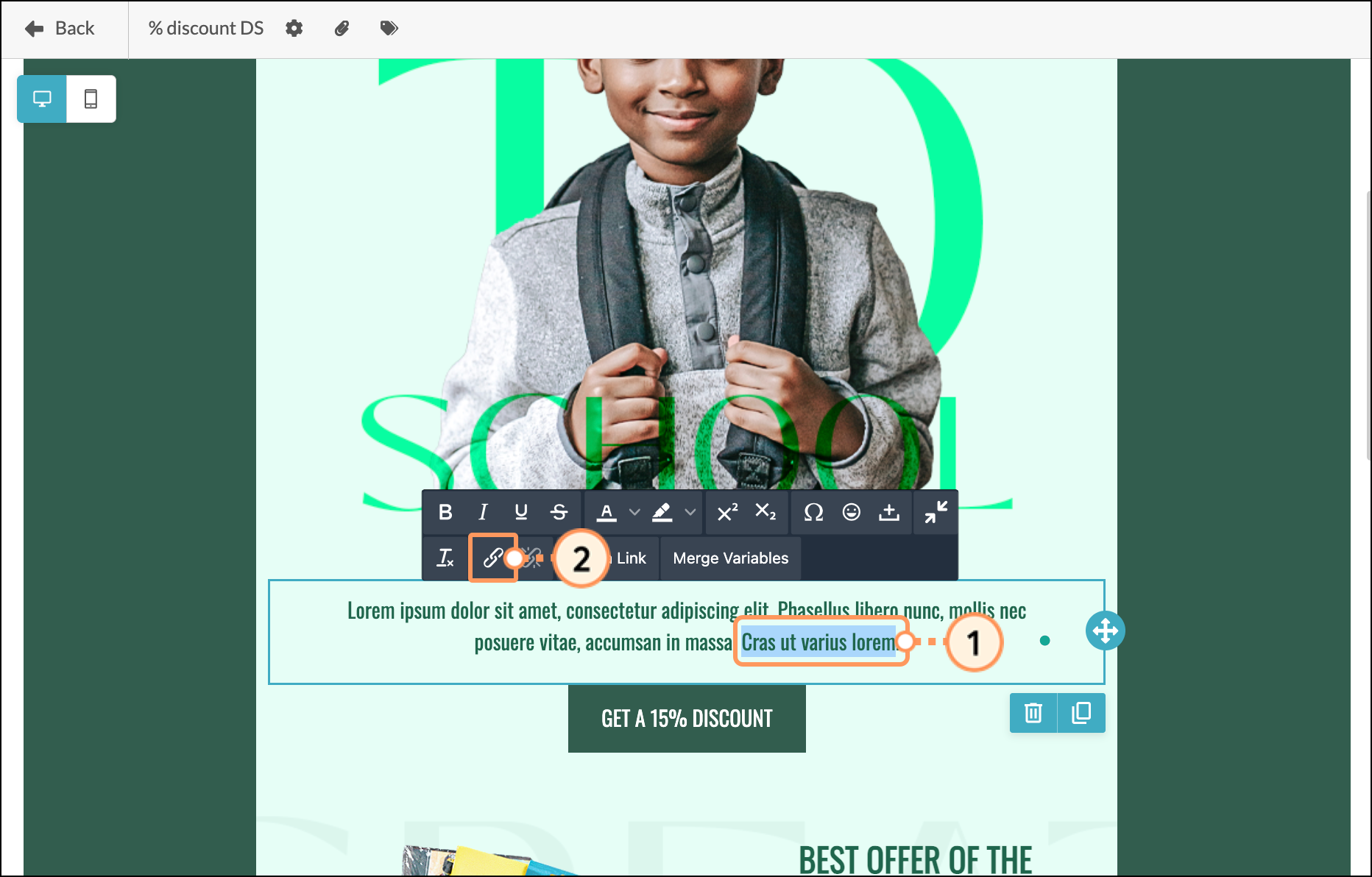
http://www.happytoys.com/?utm_source=TikTok&utm_medium=email&utm_campaign=spring_sale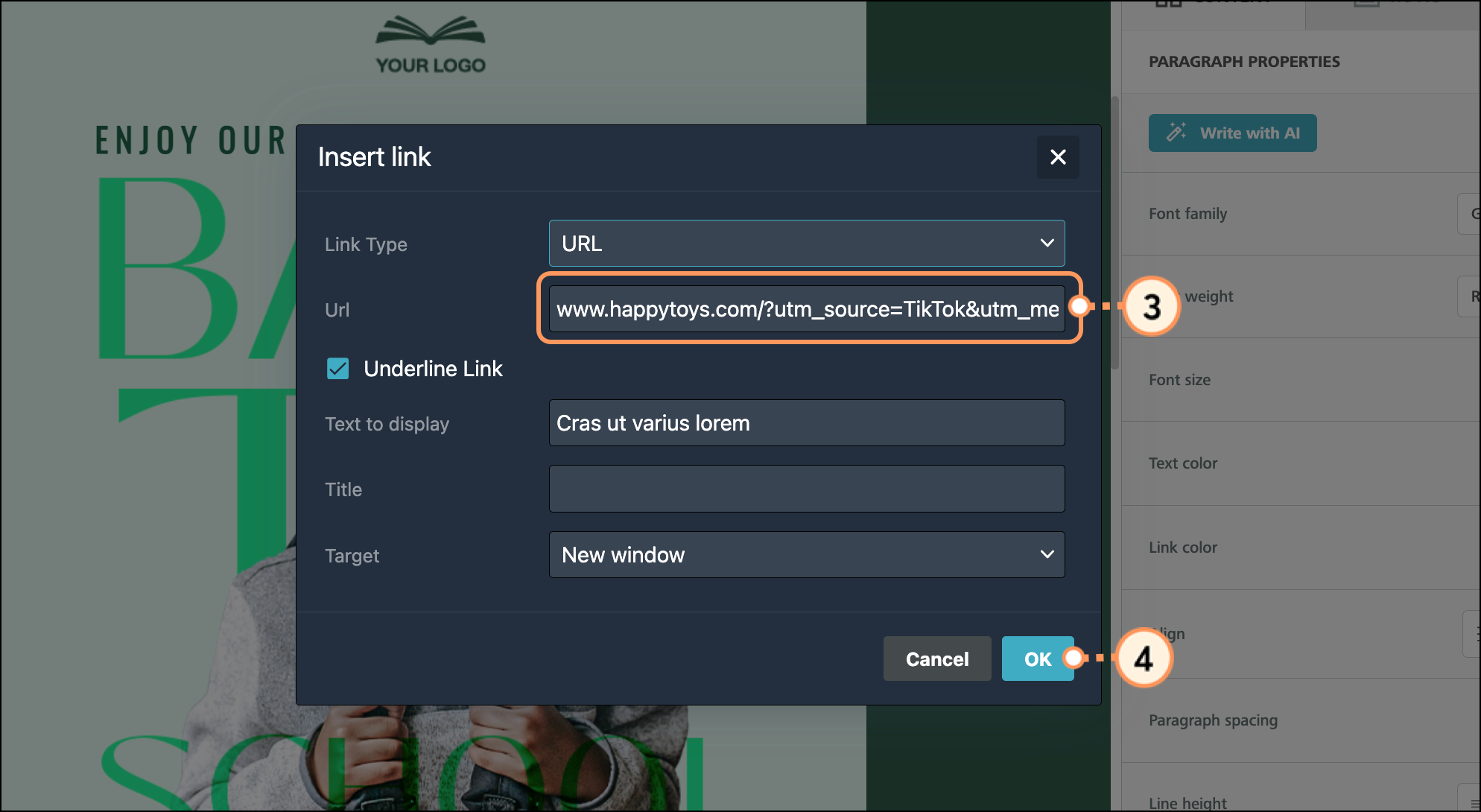
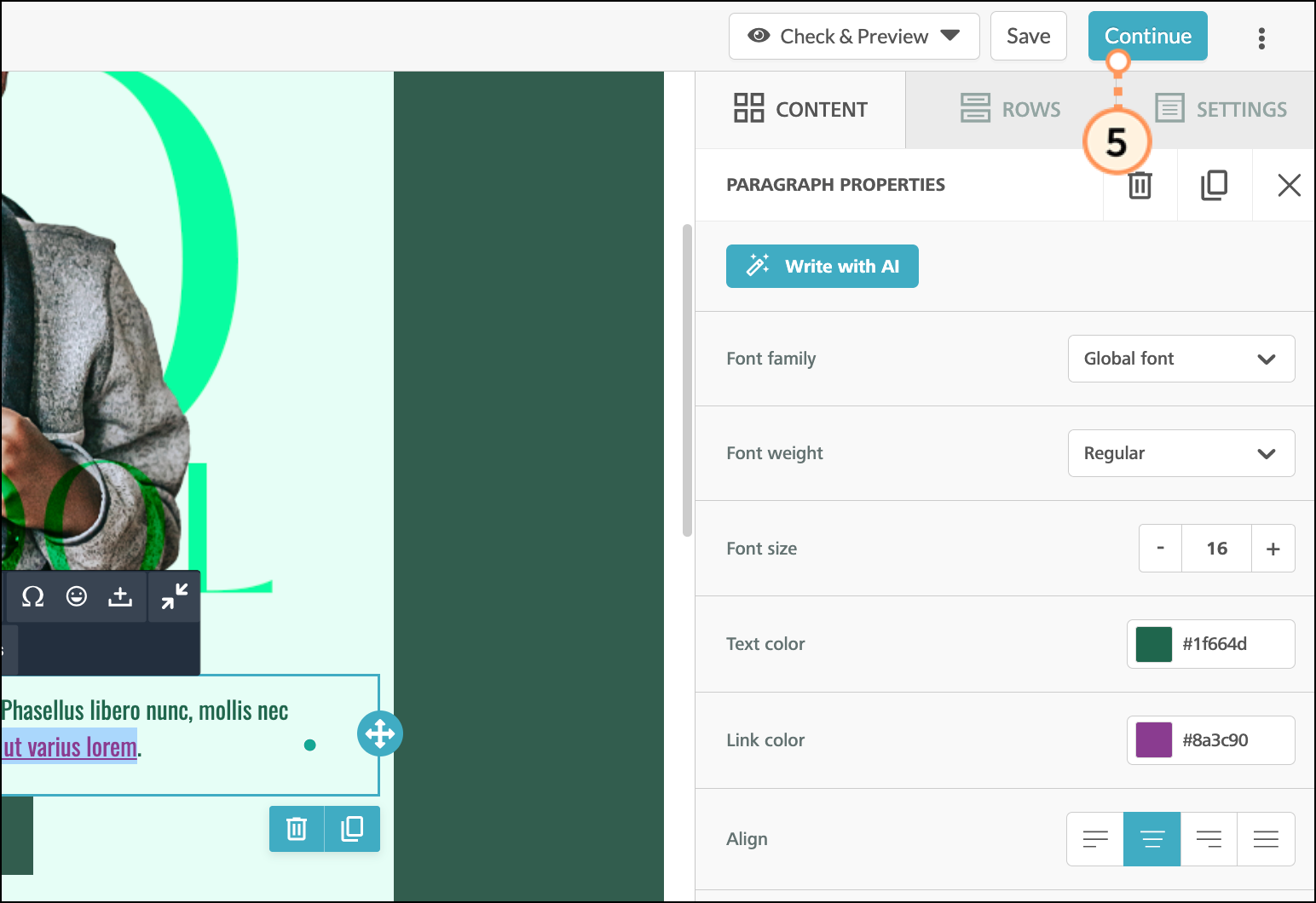
Complete these steps in the new email editor when adding links with UTM parameters to a button element:
http://www.happytoys.com/?utm_source=TikTok&utm_medium=email&utm_campaign=spring_sale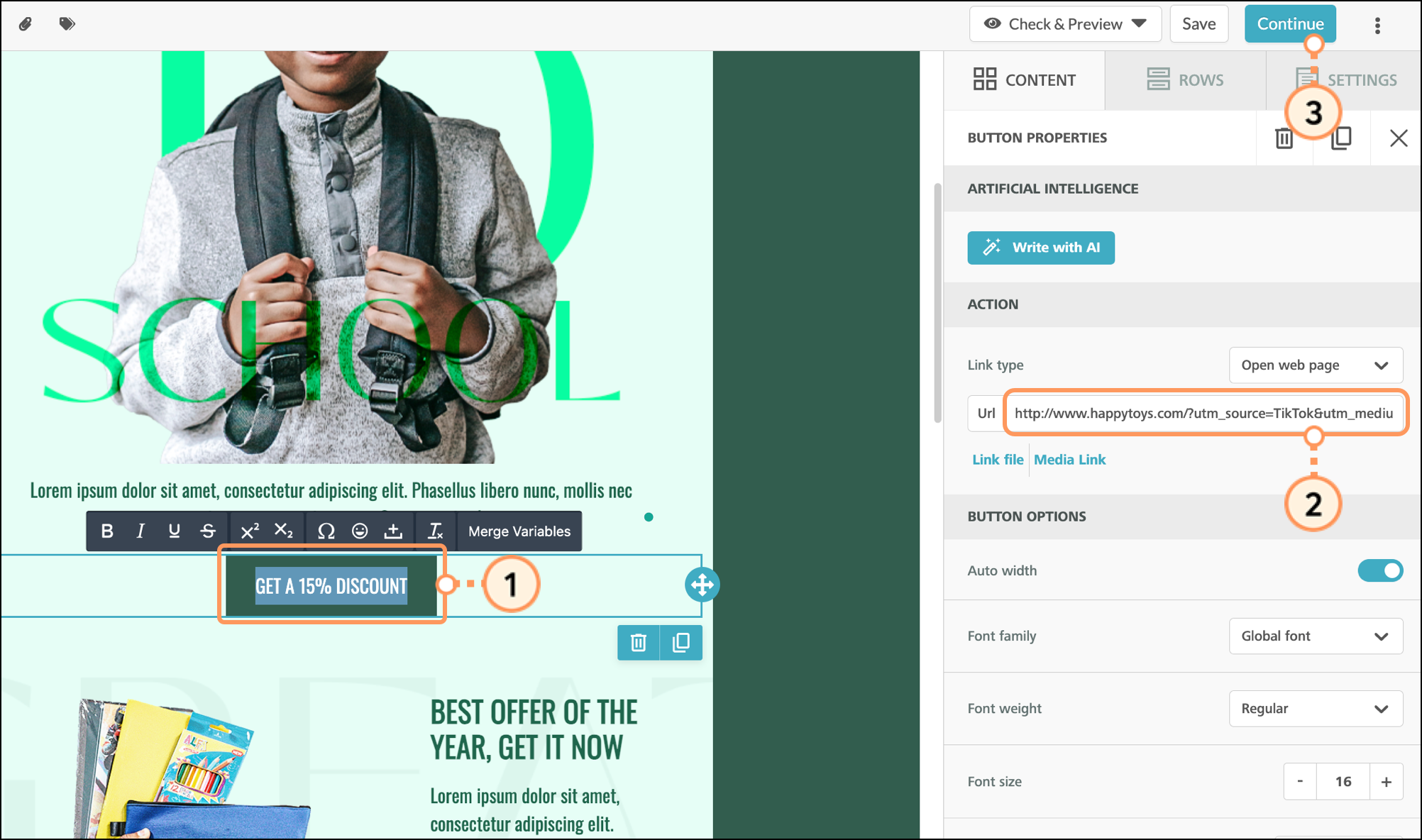
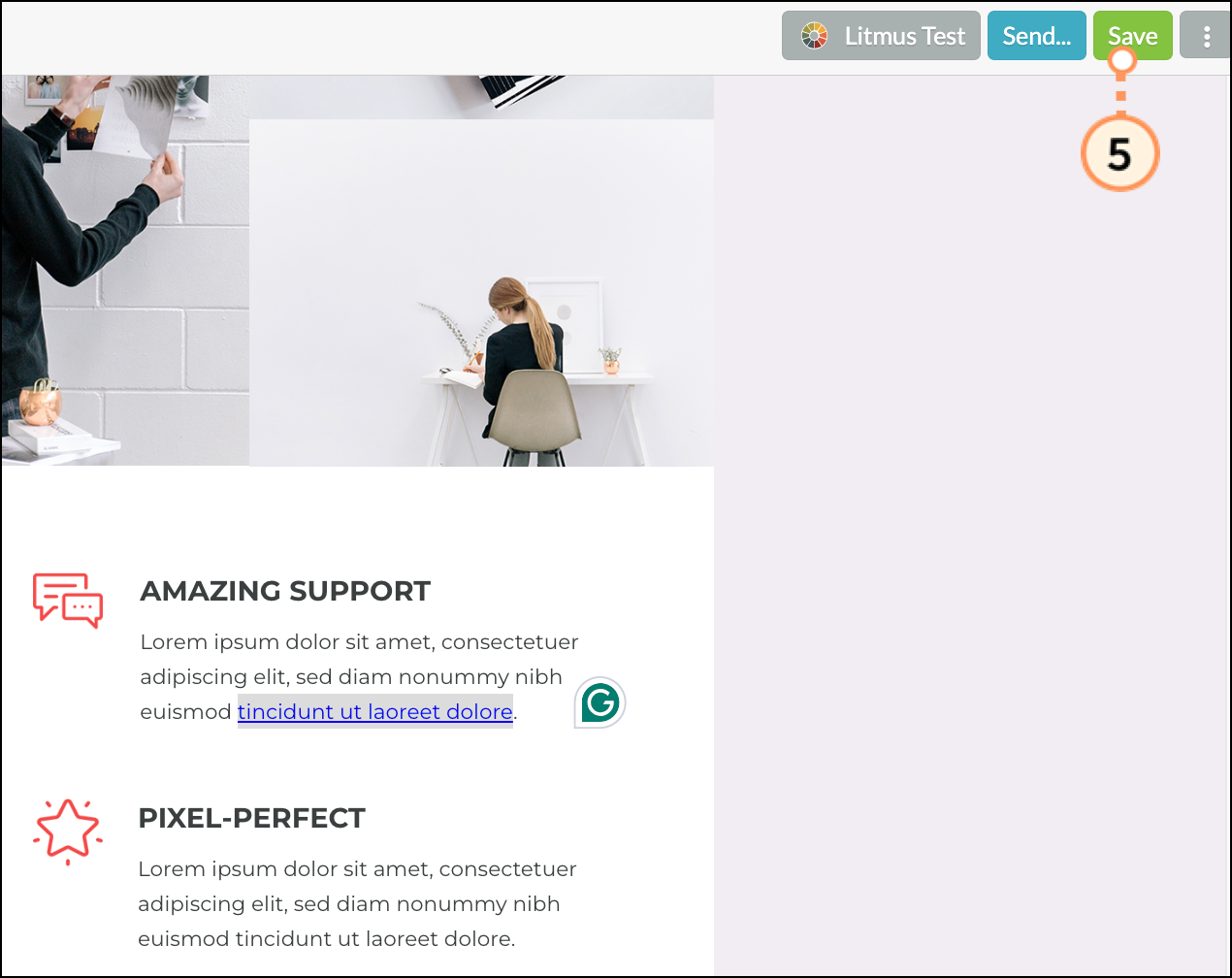
Complete these steps in the classic email editor when adding links with UTM parameters to text:
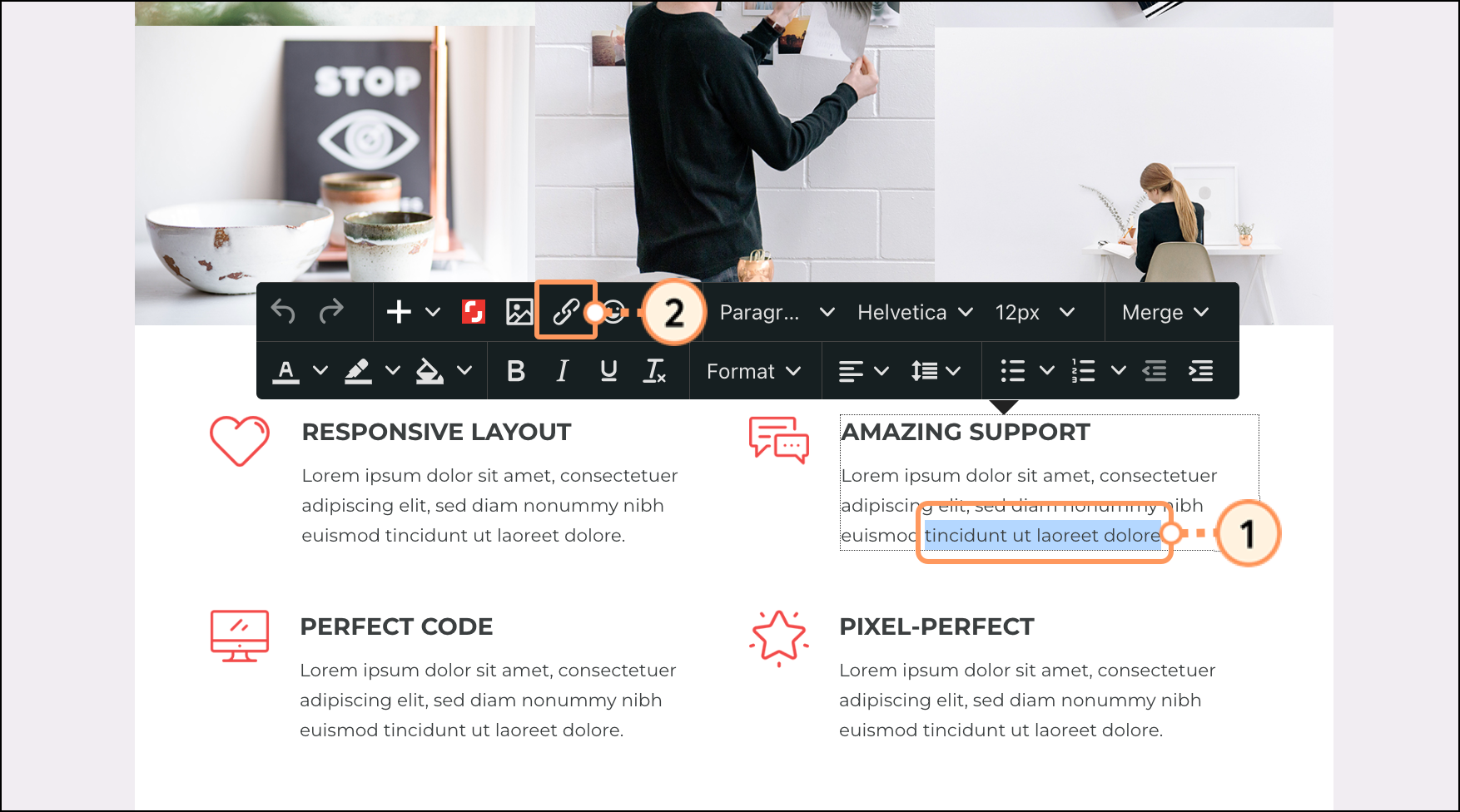
http://www.happytoys.com/?utm_source=TikTok&utm_medium=email&utm_campaign=spring_sale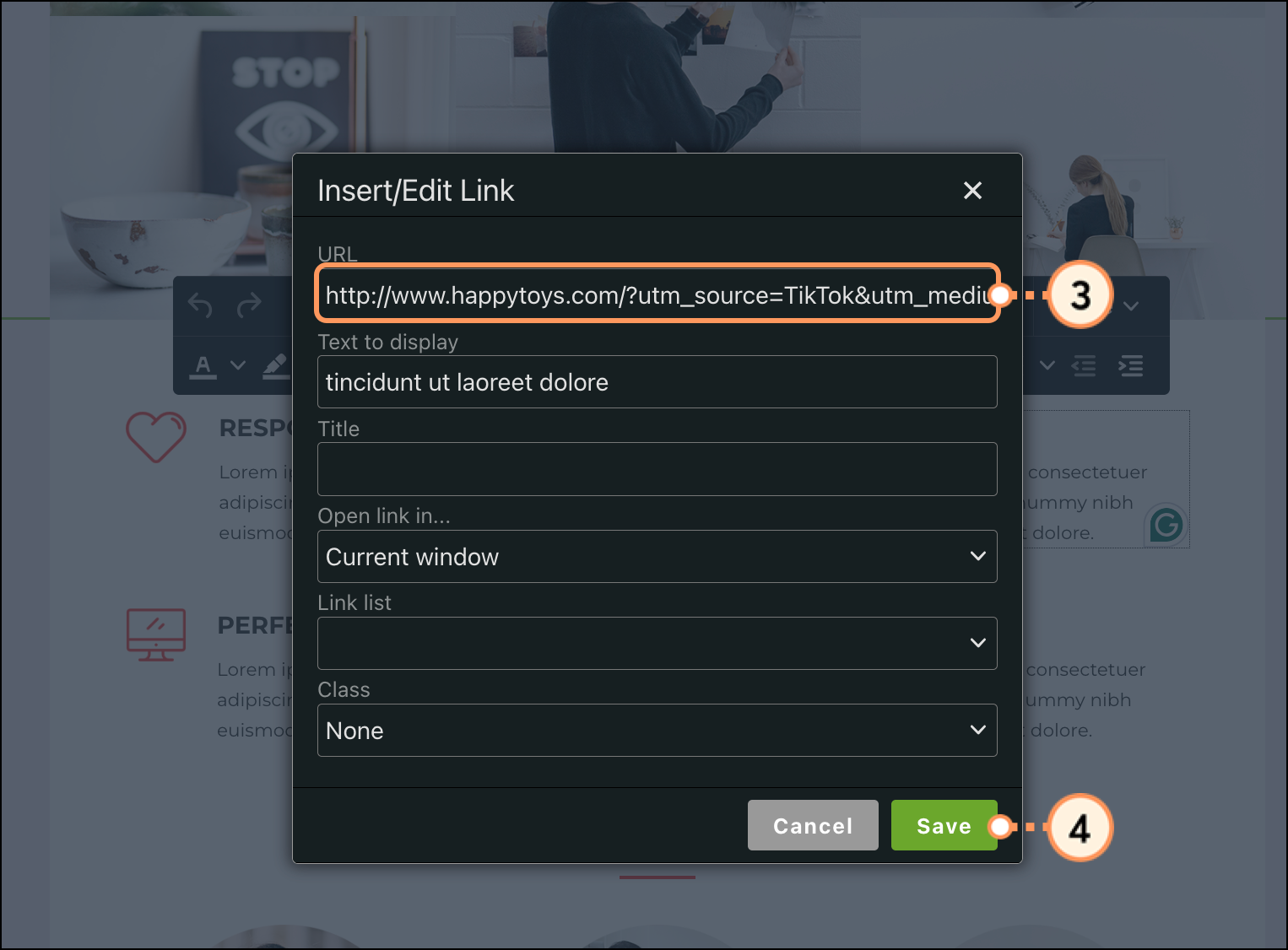
Refer to the following articles for more information on creating and using UTM codes:
Should I use UTM parameters on links on my own website?
No. Using UTM tags on internal links overwrites the visitor's original traffic source in Google Analytics and can disrupt your campaign attribution data. Use internal event tracking instead.
Should I block UTM URLs in robots.txt?
No. Blocking them prevents search engine crawlers from discovering these links. Using canonical tags is the recommended solution.
How should spaces and special characters be handled in UTM tags?
Use hyphens (-) or underscores (_) instead of spaces when building your UTM parameter links. Raw spaces are turned into %20 or +, which can make reporting harder.
What is the difference between utm_source and utm_medium?
utm_source identifies the specific platform or site sending traffic (for example: Facebook, TikTok, Google), while utm_medium identifies the broader channel category (for example: email, cpc, social).
Copyright © 2026 · All Rights Reserved · Constant Contact · Privacy Center